
If you are an ambitious property developer looking for new and exciting ways to boost market value, but are worried about costs and risks associated with technology obsolescence, then you have come to the right place.
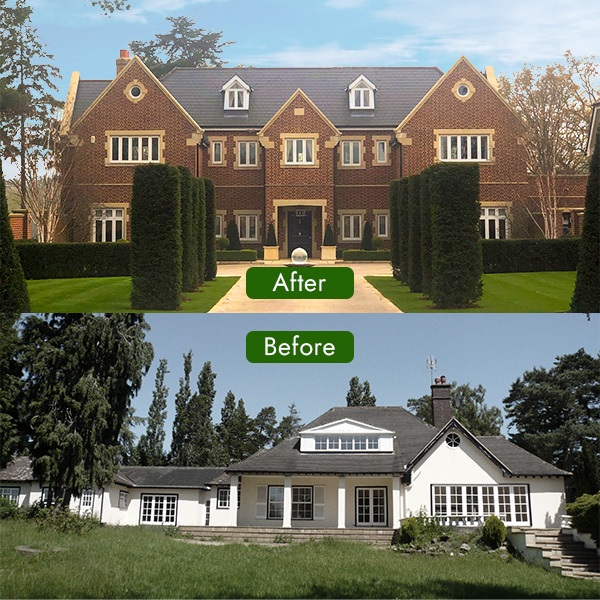
At our studio, we believe the answer lies in design that unites timeless architecture with intelligent innovation. In this feature, we take you inside one of our most ambitious smart building projects — a remarkable transformation that turned a modest bungalow in Hatfield Heath into a palatial Neoclassical mansion infused with the latest in smart building technology.
Join us as we explore how heritage aesthetics and modern intelligence can work hand in hand to create a property that’s not only beautiful, but also more efficient, more valuable, and built for the future.
St Cloud’s, Matching Road
Somewhere in the heart of Hatfield Heath on a quiet country town lane there is an architectural beauty with a mechanical and electronic brain.
In 2007 we were appointed to provide a scheme for the client to knock down an existing bungalow, and build a three storey 1015m2 mansion, that accommodates 7 bedrooms, 5 bathrooms, a Dining, Kitchen, Sitting and Morning Room, plus a games room, gym, swimming pool and more!
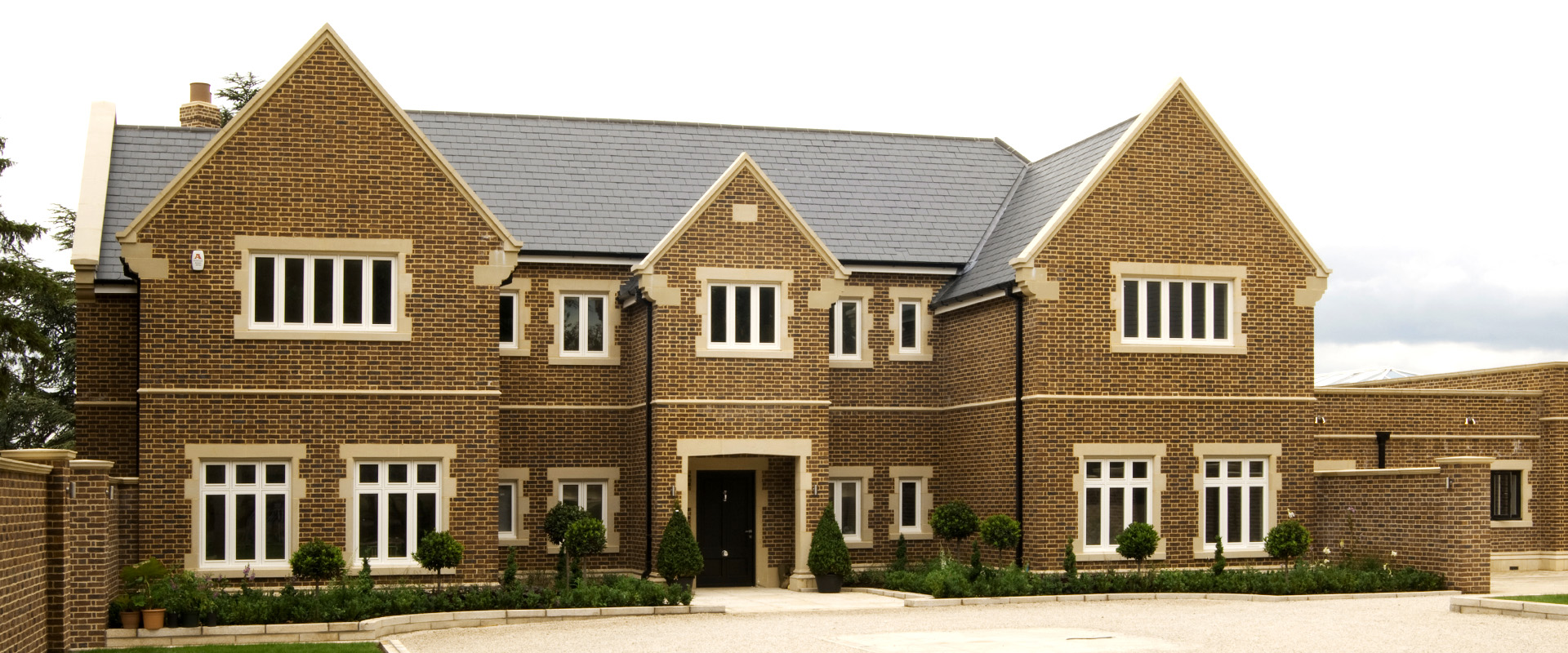
Externally the red brick characteristically of many Georgian homes stands as a contrast to the warm sandstone details around the window and door opening, gable returns, plinth and coping to elevate the facade, maintaining a sense of quality and prestige needed to be considered resembling any form of Neoclassical architecture.
The acacia white timber painted windows aren’t distinctly Georgian in nature, however the latest extensions and alterations in the 2025 feature new counterweighted sash windows that embraces the classical stylistic qualities of Neoclassical architecture much more vividly, we will discuss this more in future articles once construction has completed.
Hipped and pitched roofs intersect in harmonious and hierarchical fashion, with dark grey slate tiles that look sleek and modern even though slate is a traditional material. Even the black faux cast iron rainwater pipes sit minimally by allowing the high end features to take the main stage.
However, a home this large does come with the challenge of managing energy efficiency, for example how can we know which rooms have the lights been left on? This all wants to be automated and controlled from anywhere within the home.
Let’s take a look into what makes St Cloud’s a ‘smart building’.
Electronic Automation System
The brain of the house is all powered through a high-end electronic management system that controls audio, lighting, security and climate control of the HVAC, MVHR and more. This allows the residents to be able to control the comfort and entertainment of the house through a touchscreen or mobile app, for increased convenience and efficiency.
Automated systems make a house have a playful sense of character and allows the users to personalize their experience by sharing music, managing light and even say “GOOD MORNING” or “GOOD NIGHT”, – a delightful novelty.
MVHR
Mechanical Ventilation and Heat Recovery is such a crucial component for smart homes and for any property developer who wants to increase market value, because they make homes much more energy efficient, not to mention healthier with air quality.
This system replenishes fresh filtered air while extracting stale air, whilst also transferring recovered heat that would otherwise be lost from one side of the house to another, creating an even heating supply throughout.
The process also manages moisture within the air quality of the home, so there is absolutely no chance of mould ever forming with a system like this.
ASHP and GSHP
Having an Air Source Heat Pump or a Ground Source Heat Pump by itself does not automatically make a home a smart building by themselves, however in combination with the other features above, this adds to technological innovation and selection of M&E equipment of this mansion.
For more information click here to learn more about ASHP and GSHP.
HVAC
Working with the electronic automation system we mentioned earlier, having a Heating, Ventilation and Air Conditioning unit allows the user to heat and cool their room on quick demand.
But wait, why do we need an HVAC system if we are already using the MVHR?
For most people having an MVHR system for its air quality and efficiency control is more than enough, however the added benefit of HVAC is quick on demand heating and cooling for targeted areas of the home.
Think of MVHR as pre-warmer, and the HVAC as a little blast of heat or cooling as preferred.
UFH
Underfloor heating has become a very popular choice for property developers for both large and small projects, because they require less energy to run due to its lower operating temperature. The large surface area heats up the house from the ground-up, creating comfortable heat throughout.
For more information click here to learn more about UFH.
Are you ready to build smarter?
At St Cloud’s, we’ve proven that it’s possible to honour the timeless grace of Georgian architecture while integrating the intelligence of modern building technology. What began as a modest bungalow has evolved into a Neoclassical smart mansion — a symbol of how thoughtful design and advanced systems can coexist beautifully.
For property developers, this approach represents more than just design sophistication, but a blueprint for value creation. Smart building not only enhances comfort and efficiency but also increases long-term asset value, reduces operational costs, and attracts discerning buyers who expect the best of both worlds: heritage charm and technological convenience.
Our expertise lies in bridging that gap, transforming traditional architectural language into future-ready, profitable developments. Whether you’re envisioning a luxury residence, a multi-unit scheme, or a mixed-use project, we can help you integrate smart systems seamlessly within your architectural concept …without compromising on aesthetics, character, or budget.
If you’re a developer ready to future-proof your next project with design intelligence, let’s talk.
"*" indicates required fields


