
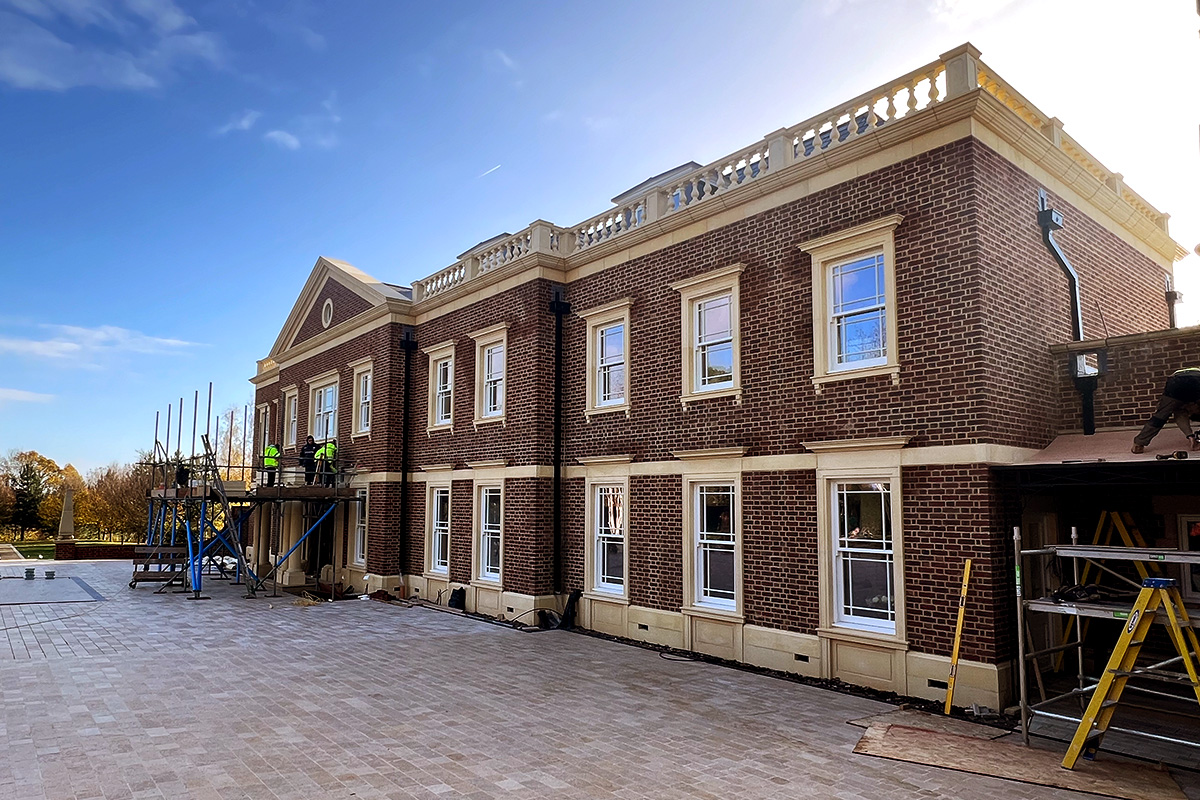
If you are a property investor looking for expertise in creating real value and long-term equity through timeless architecture, then you’ve come to the right place. Great architecture should still look elegant 50 to 100 years from now…not deliver quick, superficial results that devalue over time. Building for longevity, and creating a high-quality product grounded in well-established design principles, is one of the most reliable ways to secure strong sales and valuations.
Neoclassical architecture is practically an institution within Britain. Take a short walk through any major city centre and you’ll encounter iconic landmarks: Spencer House, Buckingham Palace, Somerset House, and countless museums, that embody the grandeur and permanence of this historic style.
Yet with rising material costs and a cultural shift toward modern and even post-modern aesthetics, you may be wondering: Is neoclassical building still marketable today?
In this article, we explore why this question is more relevant than ever. As subtle signs of a neoclassical revival begin to emerge across the UK, it’s a trend every savvy investor should understand—and capitalize on.
What is Classical Architecture?
To understand neoclassical architecture, it’s essential to first understand classical architecture itself. Classical architecture originated in Ancient Greece during the 5th century BC, and was later adopted and expanded by the Romans, who brought these design principles to Britain. The Roman architect and engineer Vitruvius documented many of these core principles in De Architectura, forming the foundation of Western architectural theory.
Classical architecture sought to create order out of chaos by observing the harmony of nature and expressing it through precise rules for columns, proportions, spatial arrangements, and structural elements – from façades to foundations, elevations to entablatures.
These ideas did not emerge in isolation. They grew out of a philosophical climate shaped by Stoicism and the concept of firmitas (strength and durability), which emphasised civic duty, longevity, and the improvement of public life through robust and rational design. Architecture was not merely functional, it embodied the cultural values of stability, beauty, and intellectual discipline.
Furthermore, classical designers looked to nature and the proportions of the human body as divine references. This pursuit of natural harmony and balanced form stands in sharp contrast to many modern architectural approaches, which often prioritise abstraction, novelty, or industrial efficiency over humanist proportions.
What is NeoClassical Architecture?
During the mid-18th century, classical architecture experienced a revival and reinterpretation. Designers began to distill the essential principles of antiquity, refining them into a style characterised by simplicity of form, balanced symmetry, and well-proportioned geometry. The result was an architectural language that remained grand and monumental, yet conveyed a timeless elegance through restraint.
Vitruvian and Palladian ideals – harmonious ratios, geometric clarity, and humanist proportion that lie at the heart of neoclassicism. While the classical orders and column forms were preserved, the entablatures and decorative elements were intentionally simplified, creating a cleaner, more refined aesthetic.
In many ways, neoclassical architecture sought to “cut the fat” by stripping away excessive ornamentation and retaining only what truly worked. The outcome was a distilled, sophisticated expression of classical beauty that still resonates today.
Palladian Architecture
In the 16th century, the Italian architect Andrea Palladio drew inspiration from Roman and Greek temple façades, embracing their emphasis on humanist proportions, architectural symmetry, and harmonious geometry. These classical influences shaped his revivalist approach so strongly that, without context, a Palladian building could easily be mistaken for an original classical structure.
One of the defining features of Palladian architecture is the use of ancient Greek-style porticos, grand entrances framed by columns and perfectly balanced symmetry. This clear hierarchy of form, executed with mathematical precision, combined with the extensive use of stone, creates a sense of permanence and refined grandeur.
It is this disciplined harmony, material quality, and commitment to classical proportion that makes the Palladian style a cornerstone of neoclassical architecture, and one that remains timeless to this day.
Georgian Architecture
In the late 17th to early 18th century, the Industrial Revolution accelerated urbanisation and transformed building practices across Britain. Brick could now be mass-produced and transported more affordably, leading to its widespread use. As a result, many Georgian buildings are characterised by their distinctive red brick façades, a colour derived from the natural iron oxide found in British clay.
Despite these changes in material, the architectural principles remained rooted in classical ideal – symmetry, balance, and humanist proportions inspired by nature. However, these principles were expressed in a more restrained and elegant manner compared to earlier classical styles.
Architectural features such as prominent chimneys, dormer windows, sash windows, grey slate roofing, and lead-clad mansard roofs are hallmarks of the Georgian aesthetic. Together, they create a refined, orderly style that still holds strong appeal in Britain’s built environment today.
Beaux-Arts Architecture
In early 18th-century Paris, architecture moved in a very different direction from the simplicity seen elsewhere. The Beaux-Arts style embraced richness and spectacle, incorporating grand entablatures, sculptural decoration, and elaborate mouldings – everything associated with architectural opulence. This approach quickly spread across Europe and America, remaining popular until the rise of modernism in the 1920s.
Despite its decorative exuberance, Beaux-Arts architecture still rests on the classical foundations of proportion, symmetry, and humanist geometry. Beneath the layers of ornamentation, the underlying structure follows the same timeless principles that define classical design.
Baroque Architecture
During the mid 17th-18th century this style was mainly used for palaces for its majestic and complex forms and rich decorations of gold with intense contrasts and artwork aimed to create an awe inspiring experience that sought to bring people closer to the divine in a most illusionistic manner.
Stripped Classicism
During the 20th century, in what was perhaps a final attempt to align classical architecture with the emerging modernist ideology, all curves, ornamentation, and references to nature were removed from the style. The result was a minimal, monolithic aesthetic – one that conveyed power and authority, sometimes to an almost oppressive degree.
It becomes difficult to categorise this style as truly classical, as the Greeks and Romans embraced a balance between order and natural irregularity to achieve harmony. Interestingly, as the world entered periods of conflict and upheaval, this architectural equilibrium also seemed to fracture. The starkness of Stripped Classicism reflects that turbulent era, both culturally and artistically.
Reviving Neoclassical Architecture for a Modern Market
As Britain experiences a renewed appreciation for permanence, proportion, and buildings with real cultural weight, neoclassical architecture is no longer a relic of the past, it’s fast becoming a premium design language for the future! For investors, this presents a rare opportunity: to create properties that don’t just perform well at sale or rental, but that endure as assets of lasting beauty, prestige, and market appeal.
At our practice, we believe the revival of neoclassical design isn’t about imitation. It’s about reinterpreting its timeless principles through today’s capabilities, precision engineering, modern sustainability standards, advanced materials, and efficient construction methods. With technologies such as off-site fabrication, improved stone and masonry alternatives, high-performance glazing, and digital modelling, we can achieve classical proportions with a level of efficiency that past centuries could only dream of.
Today’s design trends, human-centred spaces, sustainable construction, biophilic influences, and a desire for authenticity. When these classical principles are fused with modern building science, the result is a contemporary expression of timelessness: a building that feels both historically grounded and unmistakably current.
Our mission is to lead this neoclassical renaissance by crafting developments that stand the test of time…architecturally, environmentally, and financially. By honouring the discipline of classical proportions while embracing today’s innovations, we help investors create properties that don’t just blend into the market, but become landmarks within it.
If you’re ready to build with legacy, purpose, and long-term value in mind, we’re ready to bring that vision to life.
"*" indicates required fields


